

Pakhopeasy Learning-to-Learn (English)
What is the PakhoPeasy Learning to Learn Program?


View Program Overview & Kit Contents
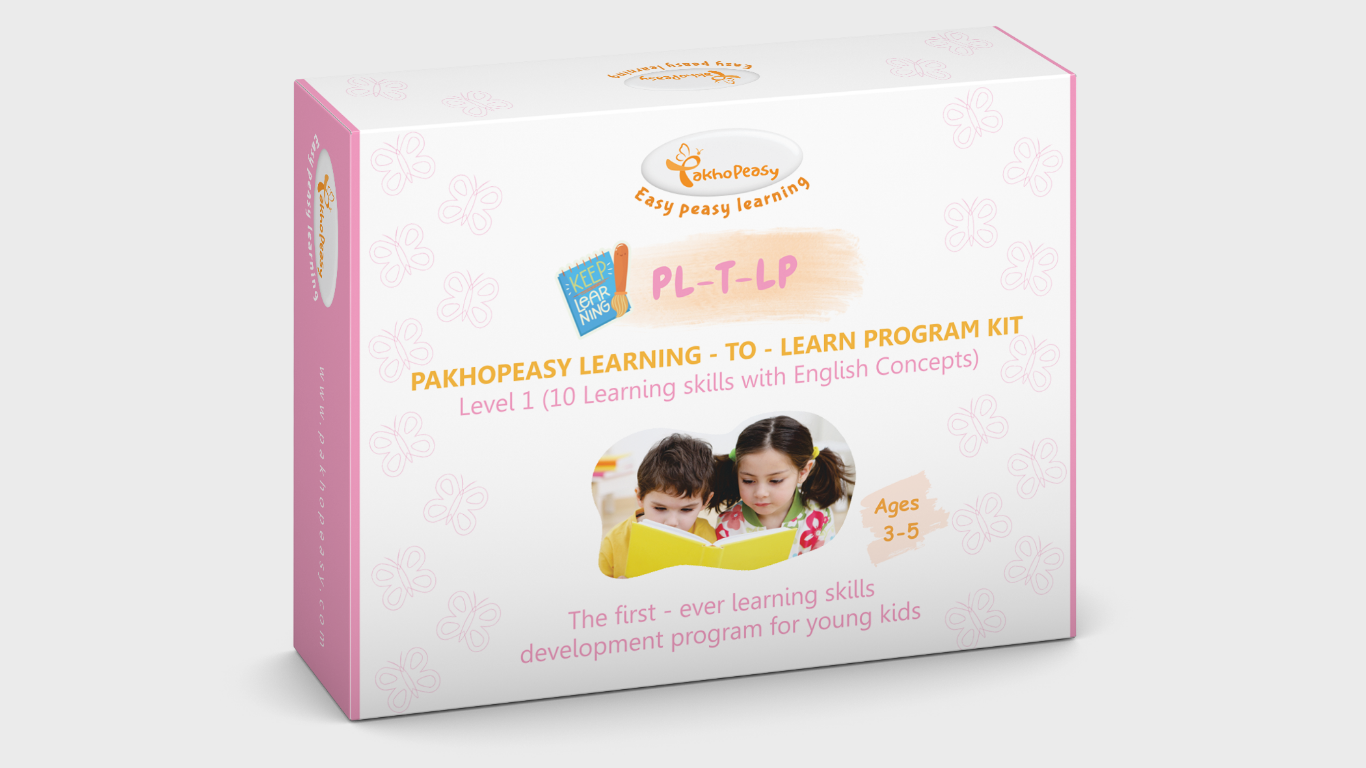
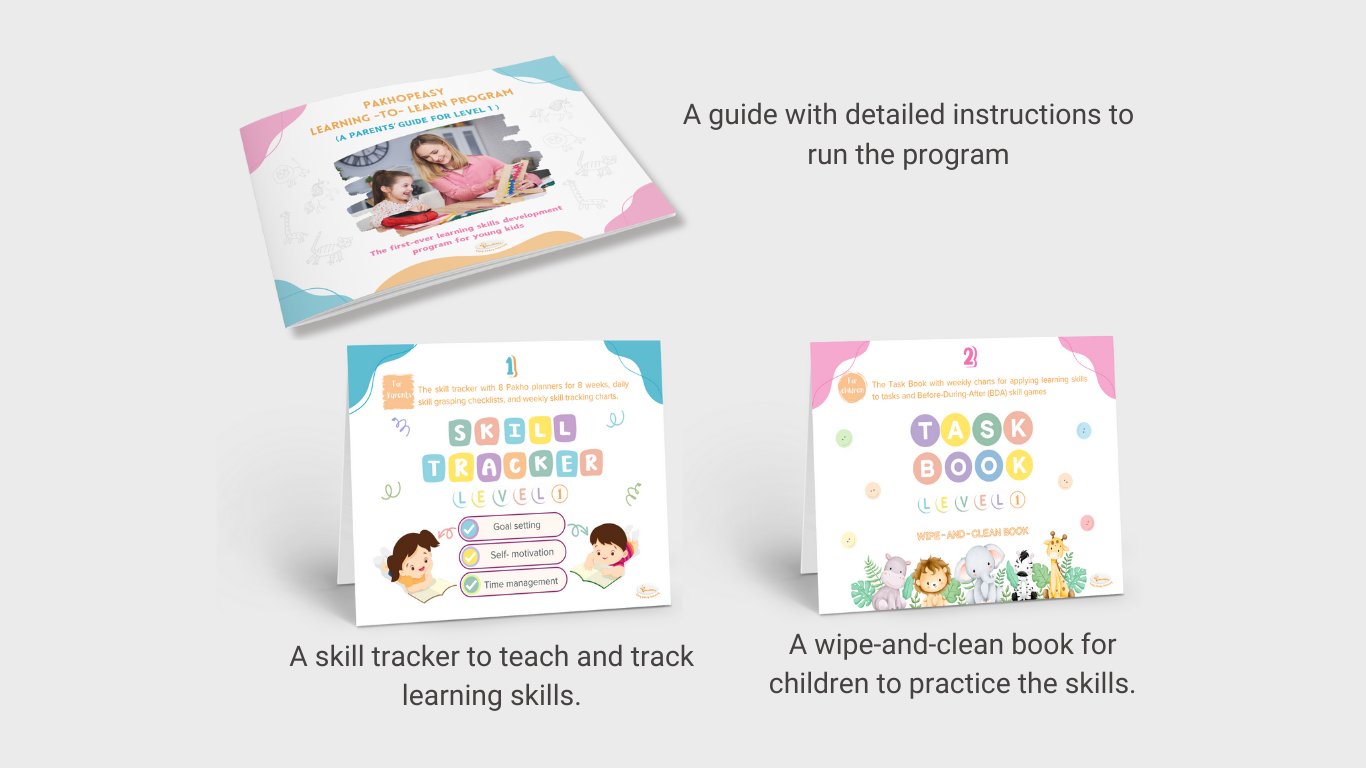
Structured Learning-to-Learn Program for Early Childhood
Pakhopeasy helps children build independent learning habits, focus, and structured learning behaviour through guided hands-on academic activities. (Academically reviewed and endorsed by the experienced educators).
INR 4000
(Institutional pricing is available for partnering centres)
WHY THIS PROGRAM?
1
Helps children build independent learning habits from the early years.
2
Focuses on how to learn, how children approach, engage with, and complete tasks, not just what they learn
3
Supports focus, confidence, task completion, and self-directed participation through guided hands-on activities
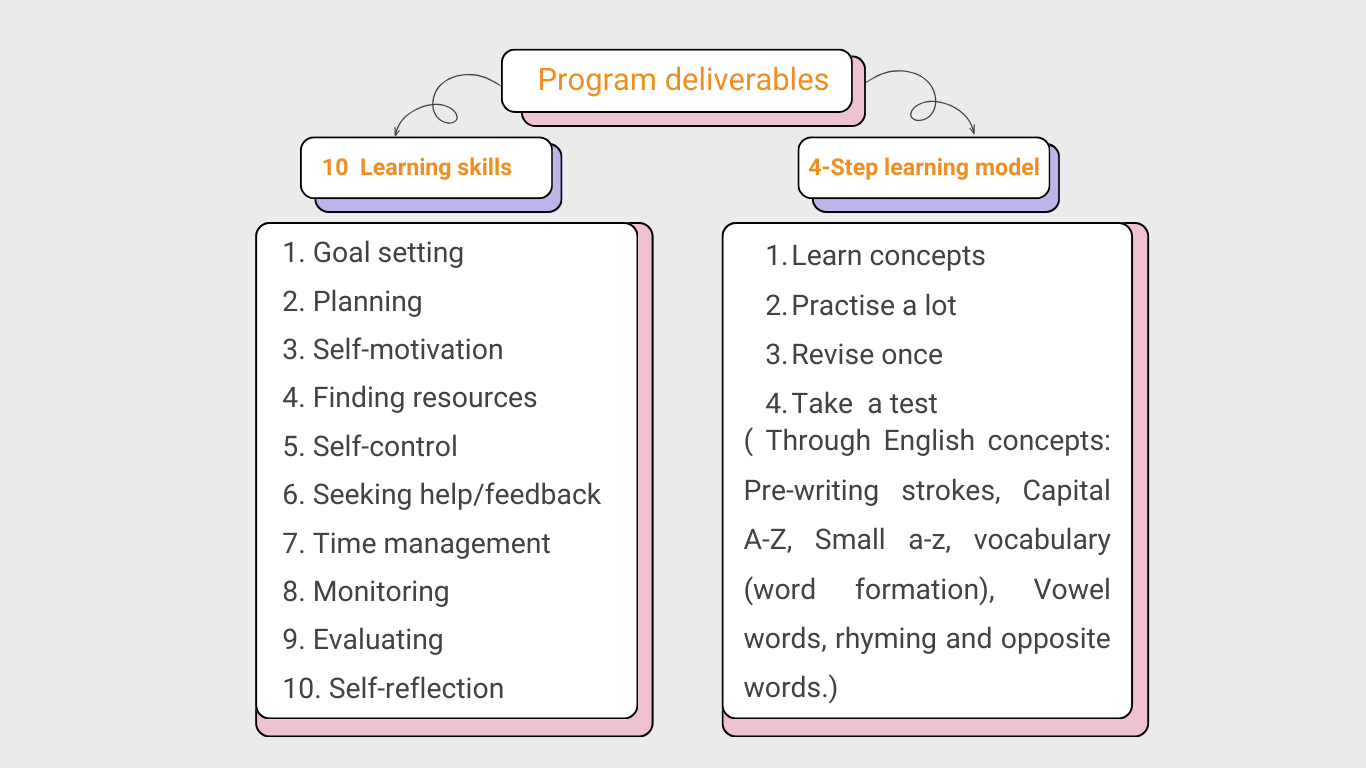
Program Deliverables
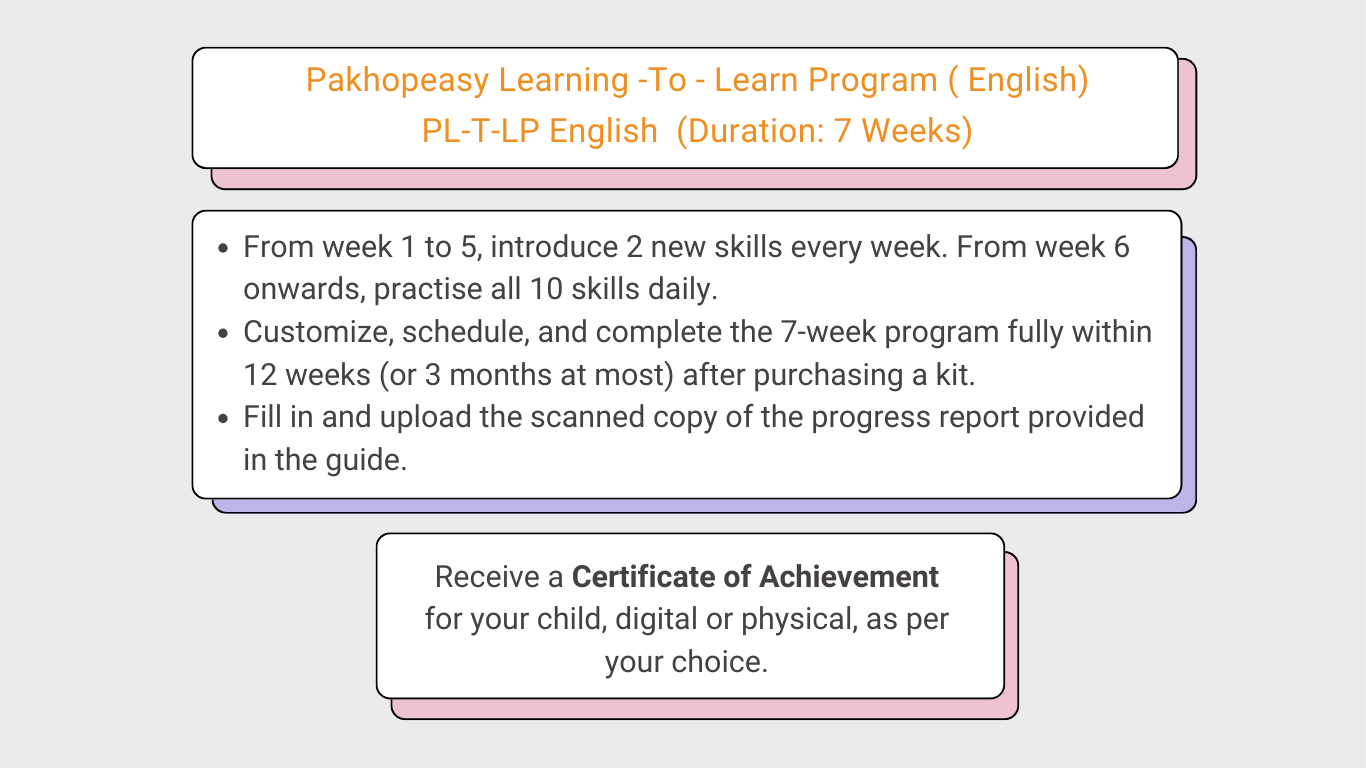
A Structured Learning-Readiness Framework
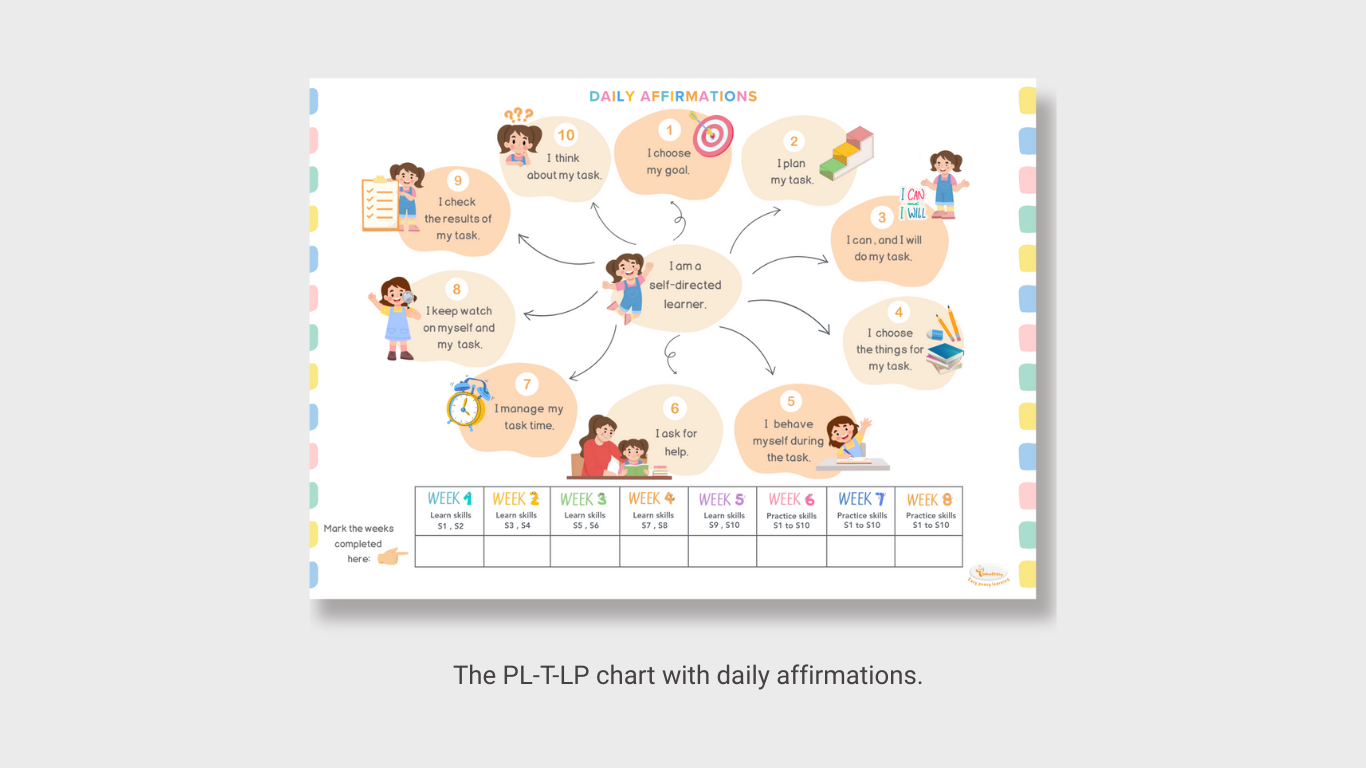
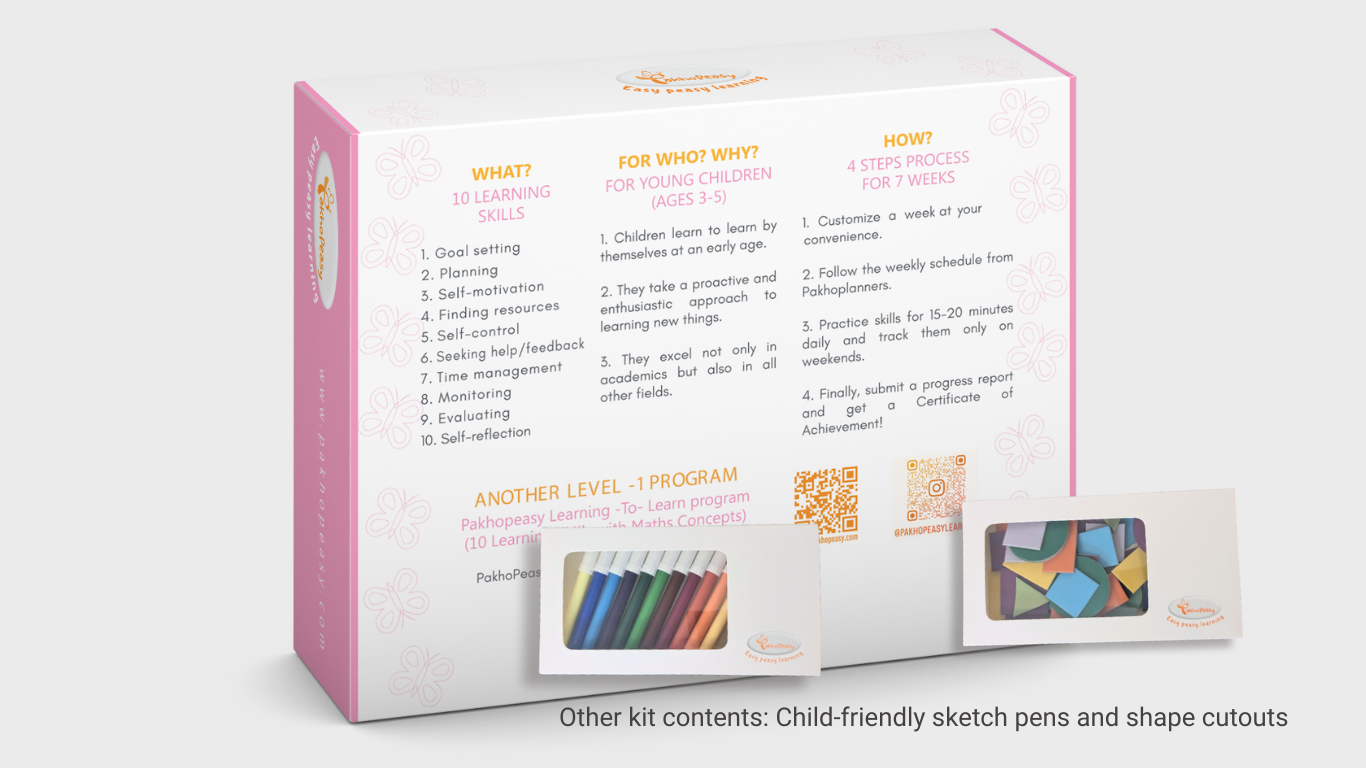
- 10 Foundational Learning Skills
10 foundational learning skills organised within a Before–During–After learning cycle - Skill Application Through English
Learning skills applied through age-appropriate English tasks and practice activities - Progressive Skill Development
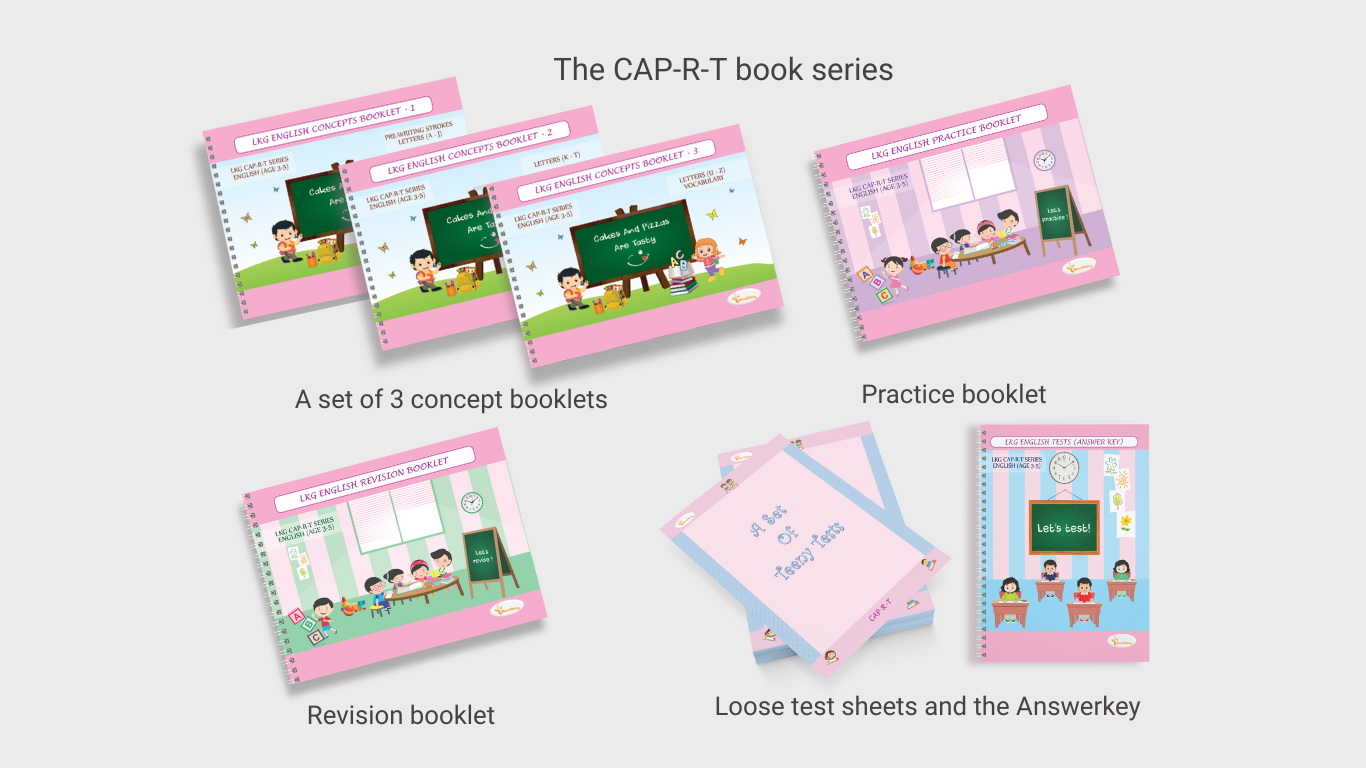
Structured skill development through progressive skill introduction, spaced repetition, and a step-wise book series
SKILLS DEVELOPED
Before the Task (Prepare)

Goal Setting
Knowing what to learn
Planning
Deciding the steps to follow

Self-Motivation
Getting ready to learn
Finding Resources
Identifying what is needed


During the Task (Learn)
Self-Control
Managing actions and emotions
Seeking Help & Feedback
Asking for help when needed
Time Management
Using time wisely
Monitoring
Keeping watch on progress
After the Task (Reflect)
Evaluating
Checking the outcome at the end
Self-Reflection
Thinking about the learning experience
ENGLISH LEARNING APPLICATION
The above 10 learning skills are applied through age-appropriate English concepts including:
Pre-writing Strokes, Capital A–Z, Small a–z, Vocabulary Building, Word Formation, Vowel Words, Rhyming Words, and Opposite Words.
PROGRAM OVERVIEW
Learning Outcomes for Children
- Learning How to Learn
Introduces children to the process of approaching and engaging with new tasks - Independent Habits
Builds independence gradually in starting, performing, and completing tasks - Self-Discipline & Self-Learning
Encourages children to participate proactively and take greater responsibility for their progress - Long-Term Learning Benefits
Supports foundational skill development and learning habits that remain useful across subjects and grades.
Flexible Home Implementation
- Order and receive a program kit of your choice, customise your learning days, and plan the week using the ready planners.
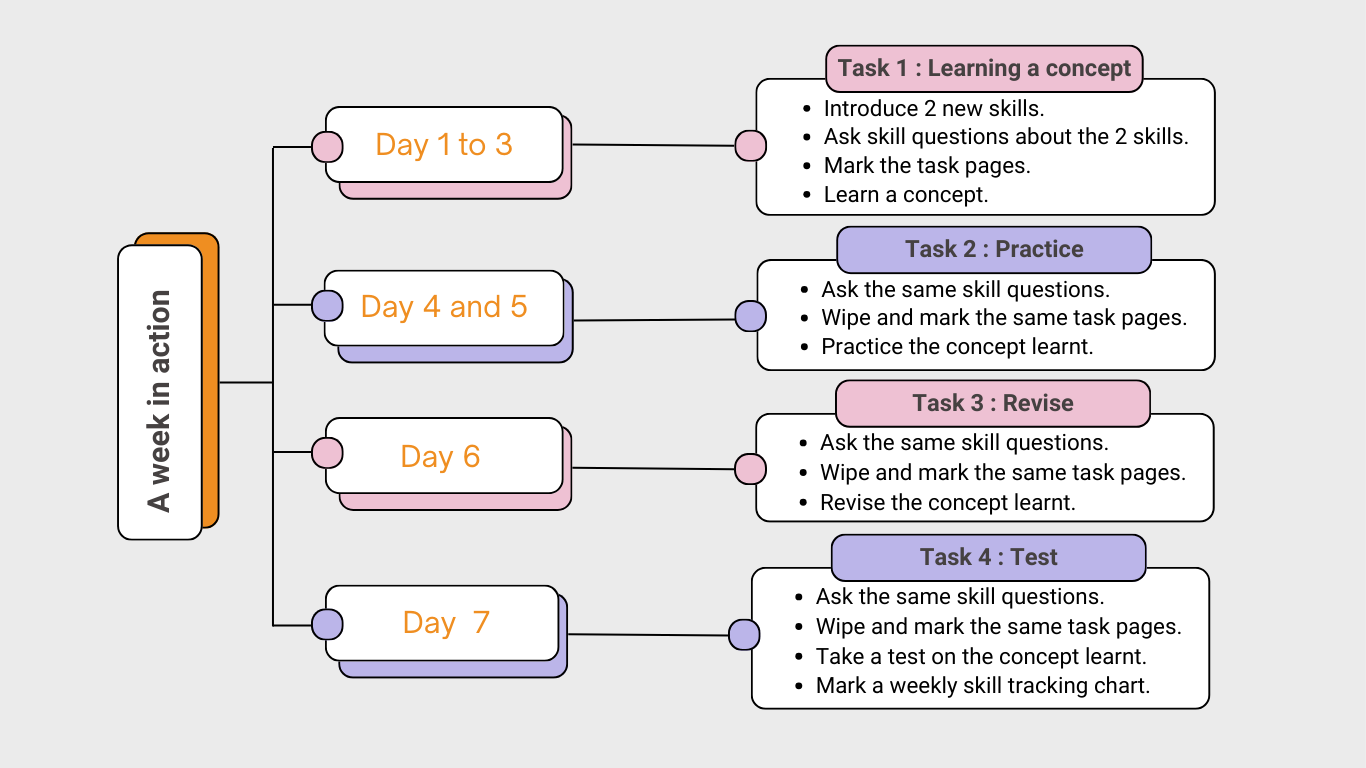
- Start with the planner for Week 1 in the Skill Tracker Book and introduce 2 learning skills as guided. Follow the week-wise planners provided for the subsequent weeks.
- Help your child apply the same 2 skills repeatedly across 4 structured learning tasks throughout the week using the Task Book.
- Track daily and weekly progress using the trackers included in the Skill Tracker Book.
- Complete the program within 12 weeks at your child’s pace and receive a Certificate of Achievement upon online submission of the progress report.
CUSTOMER REVIEWS

Mansi
Mommy of Atharva (4 years), Mumbai
Swarada Velankar
Mommy of Anvi (5 years), Thane
FAQ
Find answers to some of the most common questions on our program
• Your child is able to write comfortably
• Your child has already been introduced to basic age-appropriate English and Maths concepts


