


March 22, 2026
In today’s digital world, screens have become a regular part of early childhood. Tablets keep young children occupied, educational apps claim to accelerate learning, and videos are often used as a quick solution during busy moments.
This raises an important question for parents and educators alike:
Are screens supporting learning, or gradually replacing the experiences children need to develop essential skills?
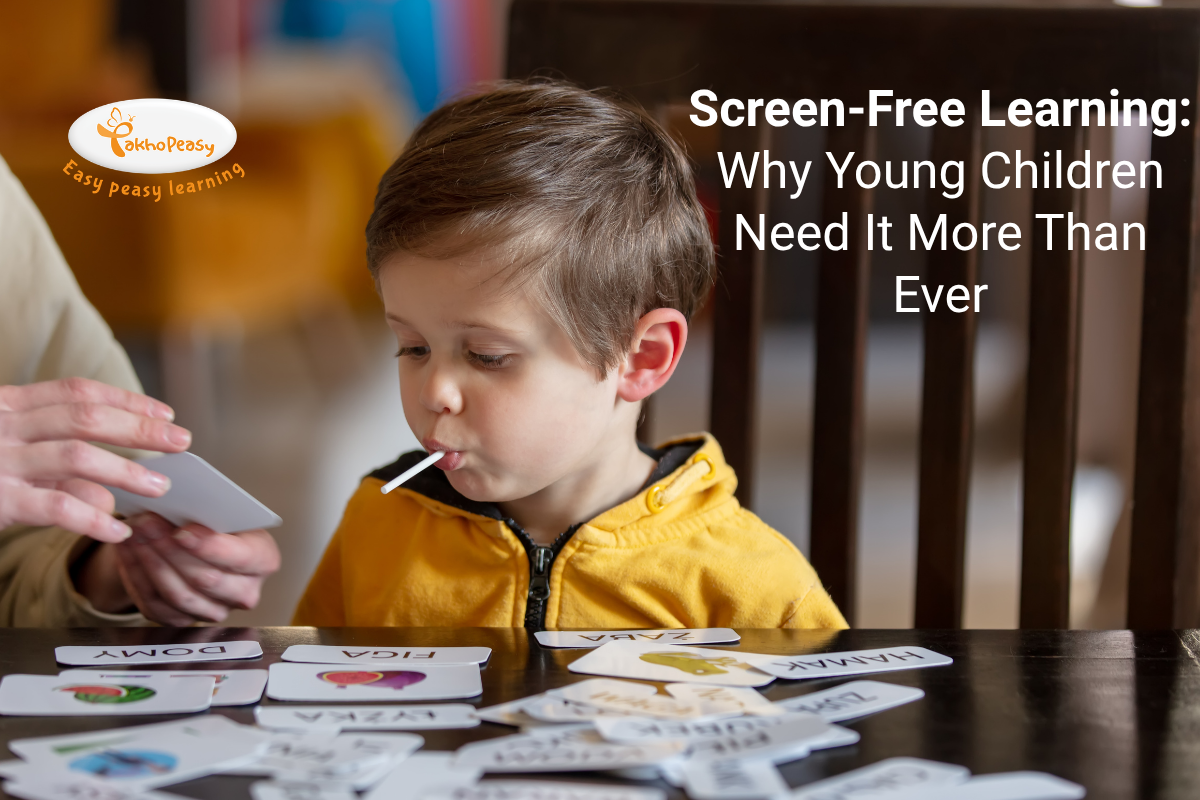
For children between the ages of 3 and 5, learning is most effective when it is active and hands-on. Children at this stage learn by touching, exploring, moving, asking questions, and solving simple problems on their own—not by passively watching content.
This is why screen-free learning plays a critical role in early childhood development. It supports the development of thinking skills, attention, independence, and curiosity—foundations that structured learning builds upon.
In this article, we will explore:
- What screen-free learning means in practical terms
- Why it is important during the preschool years
- How screen exposure can affect development
- Simple, realistic ways to encourage screen-free learning at home
- Signs your child may need more screen-free learning
What is Screen-Free Learning?
1. Young children learn best through repeated hands-on experiences
In practice, screen-free learning happens through direct, physical interaction, by touching, moving, and experimenting with the world around them.
When a child stacks blocks, they are not just playing. They are:
- understanding balance and spatial relationships
- testing ideas and solving problems
- developing patience and persistence
What may look like “doing the same thing again” is actually an important learning process. When children return to a familiar activity or revisit the same book, they are refining their skills, noticing new details, and building confidence through repetition. Research in early childhood development consistently shows that repetition is essential for learning. Each time a child repeats an activity, the brain strengthens synaptic connections (neural pathways), helping turn early experiences into lasting knowledge. Through repeated play and familiar routines, children gradually build memory, learning capacity, and emotional security.
Screens cannot fully support this process, as they limit opportunities for children to actively test ideas, make adjustments, and learn through real, hands-on experience.
2. Screen-free activities build strong thinking skills
Digital content is often fast-paced and designed for quick engagement. While it can hold attention, it does not always give children enough time to process, reflect, or think deeply.
Screen-free learning creates space for children to:
- ask questions
- explore possible solutions
- make simple decisions
- plan what to do next
These everyday thinking moments are small but significant. Over time, they help children develop self-learning habits, where they begin to approach tasks with curiosity and independence rather than waiting for instructions.
When children are regularly given opportunities for such exploration, they begin to develop independent learning habits—the ability to start, engage with, and complete activities on their own. Structured, screen-free approaches, such as the Pakhopeasy Learning to Learn programs (English and Maths), are designed around this principle, using hands-on materials to gradually build these habits over a period of 7–8 weeks.
3. Less screen time supports attention and focus
Many educators today observe that excessive screen exposure can make it harder for young children to stay engaged with slower, real-world tasks.
Screen-free activities naturally build focus because they:
- move at the child’s pace
- require sustained attention
- offer a sense of completion
For example, when a child completes a puzzle, builds a structure, or finishes an activity independently, they are learning to stay with one task until it is done.
This ability to focus is a foundational skill that supports all future learning.
4. Screen-free learning encourages creativity
Screens often present ready-made visuals and fixed outcomes. In contrast, real-world play encourages children to think, imagine, and create on their own.
For example, a simple object, such as a cardboard box, can become a house or a car, a robot or a tunnel. This kind of open-ended play supports imagination, flexible thinking, and early storytelling skills, all of which are important for cognitive and language development.
How Screens Affect Young Children’s Development?
Let’s take a closer look at what research says about screen time in early childhood.
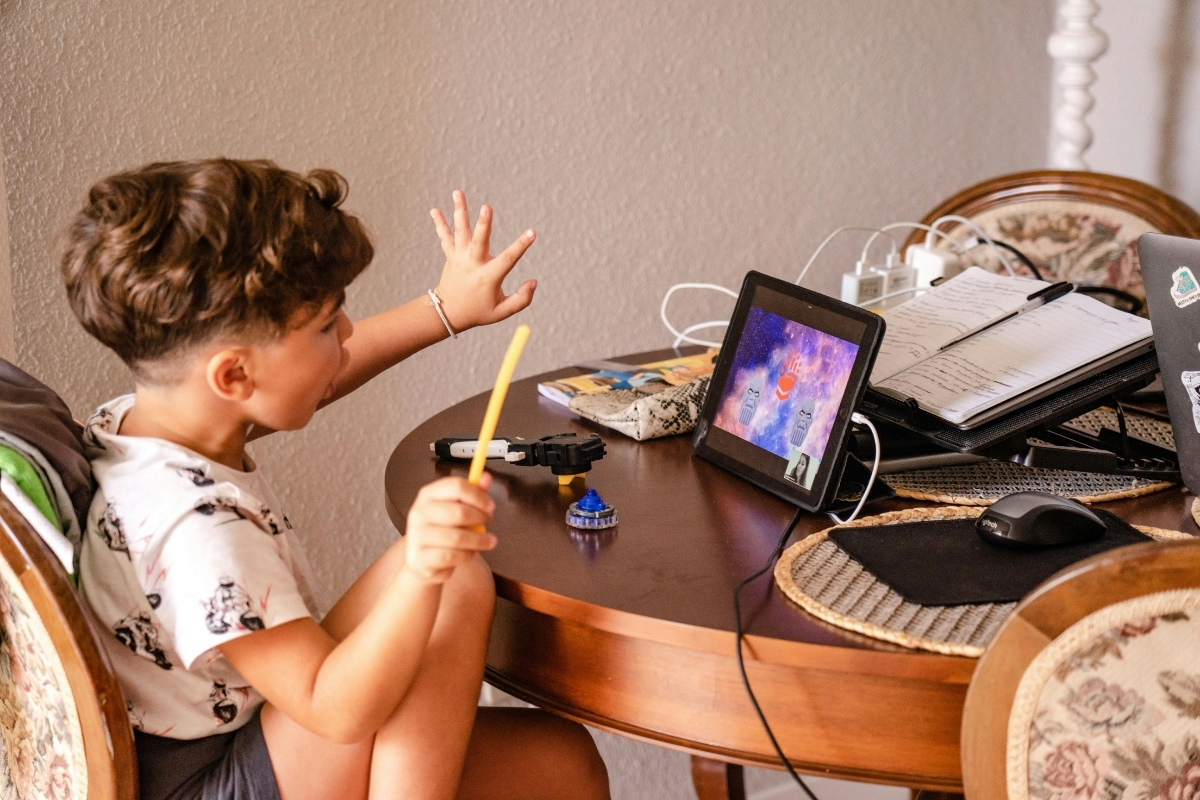
In young children, excessive screen exposure directly impacts core areas of development. During the preschool years, the brain strengthens connections through active, multi-sensory experiences like movement, conversation, and hands-on play. Research in early childhood development consistently suggests that screen exposure needs to be carefully limited during the preschool years, when the brain is developing rapidly and is highly responsive to real-world experiences.
A 2026 study and testimony presented by neuroscientist Dr. Jared Cooney Horvath to the U.S. Senate highlights a broader concern. His analysis suggests that Generation Z may be among the first generations in modern history to show declines in key cognitive areas, including attention, memory, literacy, numeracy, and executive function, when compared to previous generations.
One of the contributing factors identified is the increasing reliance on screens, combined with constant multitasking and exposure to fast-paced, short-form content. These patterns can reduce opportunities for deep, focused learning, which is especially important in the early years.
High screen use, especially passive or fast-paced content, reduces these critical interactions. As a result, children get fewer opportunities to build essential skills, which may lead to:
- Shorter attention spans and difficulty staying focused on tasks
- Delayed or weaker language development due to reduced back-and-forth interaction
- Lower problem-solving ability from lack of hands-on exploration
- Poor self-regulation, including difficulty managing emotions and impulses
- Reduced patience and persistence in effort-based activities
- Limited independent and imaginative play, affecting creativity
Over time, these patterns can affect how a child engages with learning, making it more challenging to develop the focus, confidence, and independence needed for school readiness and long-term learning.
Simple Ways Parents Can Encourage Screen-Free Learning at Home
Do you often find yourself saying, “Just five more minutes on the tablet…” and it turns into thirty?
Or noticing that your child quickly gets bored without a screen, even when there are toys around?
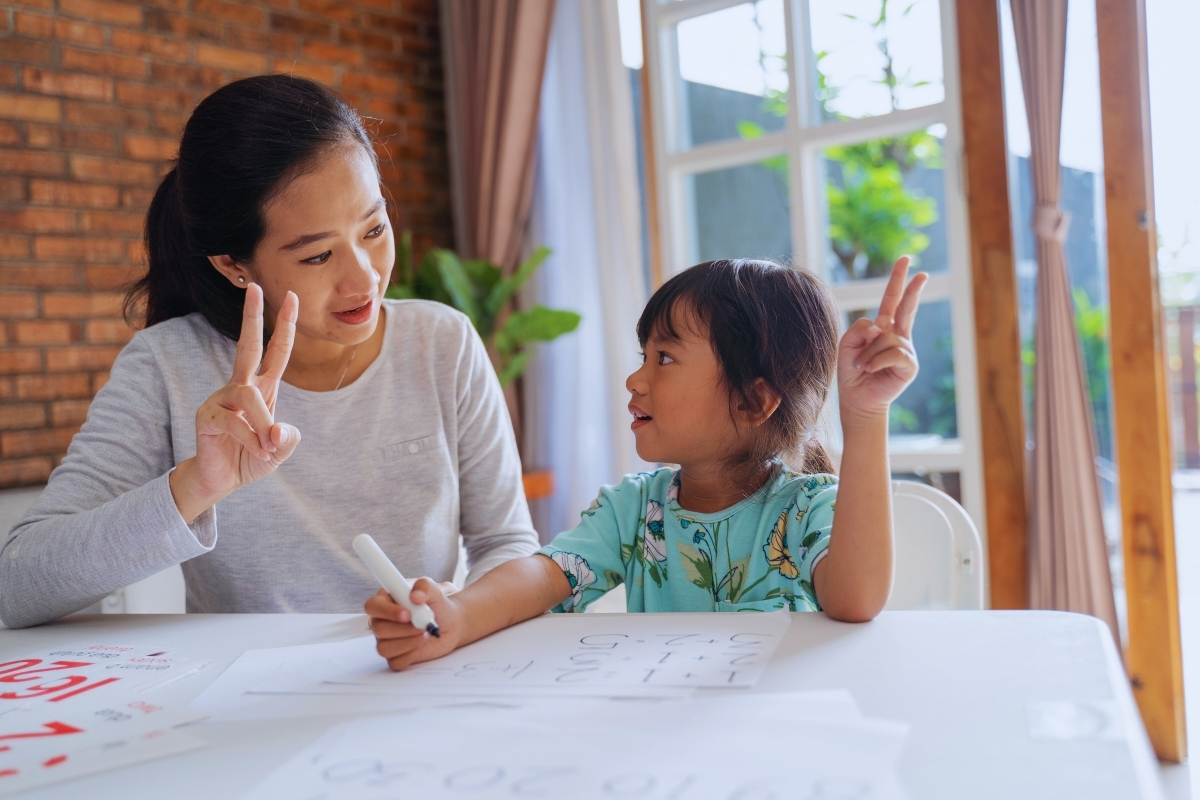
Many parents experience this. It can feel challenging to keep children meaningfully engaged without relying on screens, especially during busy days.
The good news is you don’t need to remove screens completely. What makes the difference is how much space we create for real-world learning alongside them.
Here are some simple, practical ways to gradually build more screen-free learning into your child’s day without turning it into a struggle.
1. Create a daily screen-free routine
Young children feel more settled when they know what to expect.
Instead of focusing on reducing screen time, it often works better to build predictable screen-free moments into the day.
For example:
- Morning: a simple “start-your-day” activity like sorting spoons, matching socks, or building something small
- Afternoon: outdoor play, water play, or a movement-based activity
- Evening: storytelling, picture reading, or quiet conversation
Over time, children begin to look forward to these moments rather than asking for screens out of habit.
2. Offer open-ended, real-life learning materials
Children engage more deeply with materials that allow them to explore freely rather than follow a fixed outcome.
Instead of adding more toys, focus on simple, versatile materials such as:
- containers, bowls, and measuring cups for pouring, transferring, and organising
- tongs, spoons, and droppers to develop control and coordination
- wooden blocks, boxes, and stacking items for building and balancing
- buttons, beads, lids, or natural objects (like shells or stones) for sorting and grouping
- paper, crayons, chalk, and basic craft materials for drawing and creating
- cloth pieces, ribbons, or soft materials for open-ended play and arranging
These materials can be used in multiple ways, allowing children to explore, test ideas, and make small decisions independently. Because they are rooted in real-life experiences, children stay engaged longer and learn through active participation rather than instruction.
3. Encourage small independent tasks
One of the most powerful shifts is moving from entertaining the child to involving the child.
Instead of setting up everything for them, try giving small responsibilities.
Even simple tasks like:
- choosing materials
- completing an activity step-by-step
- putting things back after use
help children develop ownership and self-direction.
These everyday moments quietly build independent learning habits, where children begin to start and complete tasks without constant reminders.
4. Use conversations to guide thinking
Often, the way we respond matters more than the activity itself.
Instead of quickly helping or correcting, try slowing down and asking:
- “Which activity would you like to start with?”
- “What do you think we should do next?”
- “Why do you think this happened?”
- “How can we fix this?”
These small pauses encourage children to think, reflect, and respond, rather than depend on instructions.
Over time, children become more confident in trying solutions on their own.
Signs Your Child May Need More Screen-Free Learning
Sometimes, children show subtle signs that screens have become their primary way of staying engaged.
You might notice:
- Quickly losing interest in non-screen activities is common.
- They often say “I’m bored” without a device
- Getting impatient with activities that take time
- They wait for instructions instead of starting on their own
These are not concerns but signals.
With consistent exposure to simple, hands-on experiences, children usually begin to regain focus, engage for longer periods, and take more initiative in their learning.
FAQs: Screen-Free Learning for Young Children
1. How much screen time is recommended for preschool children?
For children between ages 2–5, most child development experts recommend limiting screen time to around one hour per day, and ensuring that the content is high-quality and age-appropriate.
More importantly, screen time should not replace active play, conversation, and hands-on learning, which are essential for building foundational skills during these years.
2. What are the benefits of screen-free learning?
Screen-free learning supports the development of core early learning skills, including:
- problem-solving and reasoning
- attention and focus
- independent thinking
- creativity and flexible thinking
- social and communication skills
These abilities form the base for structured learning, helping children engage more confidently in school and everyday tasks.
3. Are educational apps useful for young children?
Educational apps can be useful in moderation, especially when they are interactive and used with adult guidance.
However, they should be seen as a supporting tool—not a primary way of learning. Young children benefit far more from experiences where they can touch, explore, and respond actively, rather than passively watch or tap through content.
4. What are some effective screen-free activities for children ages 3–5?
- Treasure Hunt with Clues
Hide objects and give simple clues (“find something round/soft”) to build listening and problem-solving. - Mini Shop at Home
Create a pretend shop using household items to encourage counting and decision-making. - Mystery Bag Game
Child feels and guesses objects without looking, building sensory awareness and language. - Build and Test Challenge
Build simple structures (tower, bridge) and test strength or balance to develop thinking and persistence. - Follow the Leader (Thinking Version)
Add multi-step instructions (“touch something blue and sit down”) to improve attention and memory. - “What Comes Next?” Game
Create simple patterns or sequences and ask the child to predict the next step, building logic and reasoning.
Reducing screen time is often easier when done gradually and consistently, rather than through sudden restrictions.
Helpful approaches include:
- setting clear and predictable screen routines
- offering engaging alternatives before screen time begins
- involving children in choosing activities
- staying present during transitions between activities
Over time, children begin to adjust to new routines and find interest in screen-free experiences, especially when those experiences are meaningful and age-appropriate.
Final Thought
Early childhood is not about exposing children to more content—it is about helping them build the ability to learn.
This ability develops through simple, everyday experiences. When children are given time and space to:
- ask questions
- try out ideas
- solve small problems
- engage with tasks independently
they begin to develop the core skills that support long-term learning.
Screens can be a part of modern childhood, but they cannot replace these foundational experiences. What matters most during the preschool years is active engagement, repetition, and real-world interaction.
By creating more opportunities for screen-free learning, parents and educators can help children develop focus, independent thinking, and confidence, skills that form the foundation for structured learning and continue to benefit them well beyond the early years.


